Can your annuity keep paying your partner for life?
Robin Powell
Robin Powell is a freelance journalist and author, and a financial consumer advocate. He is also the editor of The Evidence-Based Investor.
Published
This article is general information, not a personal recommendation. Pension and tax rules can change, and suitability depends on your circumstances.
Dave is 65, and he has £100,000 in a pension pot he is about to turn into an income for life. He and Angela have been together for 22 years. They never got round to getting married.
Angela has a state pension coming and about £40,000 of her own in an old workplace scheme. Dave’s pot is the larger half of what they will live on.
If Dave buys the most common kind of annuity, Angela gets no income for life from it.
Dave and Angela are made up. The figures are not.
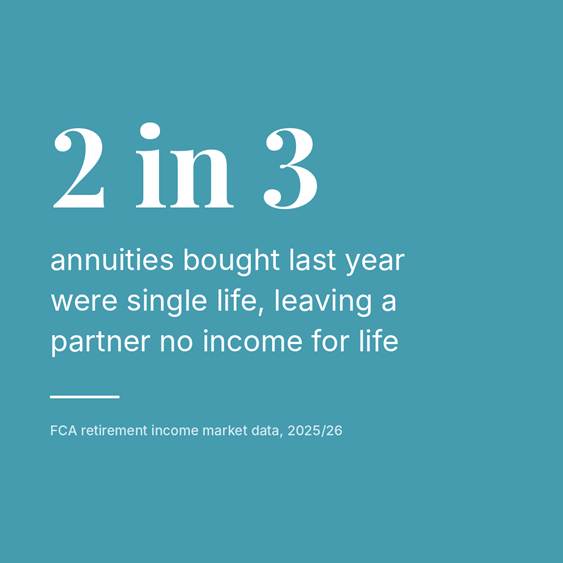
In the year to March 2026, people in the UK bought91,311 annuities, and just over two in three were single life.
For many of those buyers that was the right answer. A single-life annuity pays more, and if nobody depends on your income, the extra is worth having.
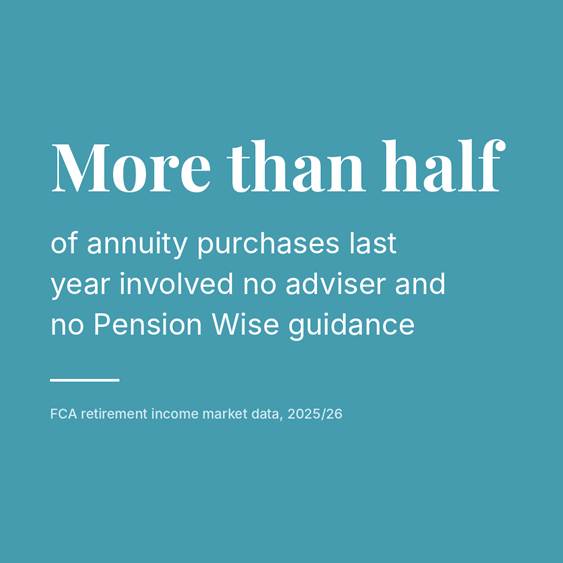
But there is a difference between choosing that and ending up with it. More than half of all annuity purchases last year were made with no help at all. No adviser, and no guidance fromPension Wise, the government’s free service.
Dave gets one chance to decide which of those he is doing.
What it costs, and what it buys
The alternative is called a joint-life annuity. While Dave is alive it works like any other: he hands over his pot and gets an income for life. The difference is what happens afterwards. Instead of stopping when he dies, the income carries on to a second person for the rest of their life, however long that turns out to be. He chooses how much. Providers typically offer half, two-thirds or all of it.
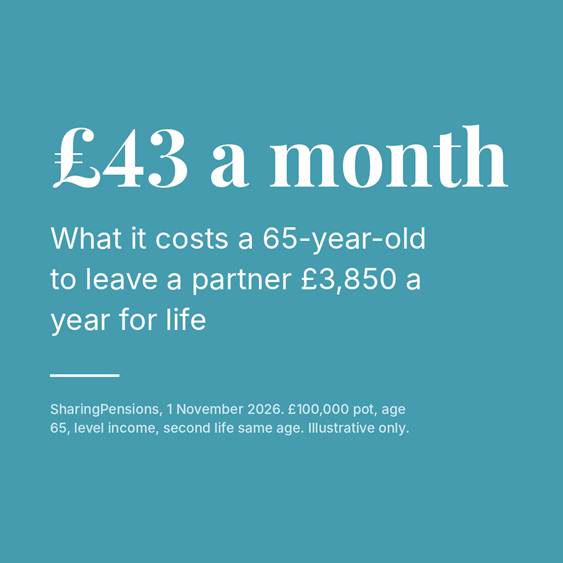
These figures come fromSharingPensions on 1 November, for a £100,000 pot at 65 with a second person of the same age, with the income staying level and no health conditions taken into account.
A single-life annuity pays Dave about £8,200 a year.
Protect half the income for Angela and Dave’s drops to about £7,700. That is £43 a month out of his pocket. In exchange, if she outlives him, Angela has about £3,850 a year for the rest of her life, on top of her state pension and her own small pot.
Protect all of it and Dave’s income drops to about £7,200, or £86 a month. Angela would then have about £7,200 a year for life.
That is the deal, in both directions. Whether it is worth taking is not something anyone can decide for Dave. But the question has a shape. If his income stopped at 70, would Angela manage on what is left?
The halfway house most people buy
There is a middle option, and it is the one most buyers actually choose. Around three in four annuities sold last year came with a guarantee period, which keeps the income running for a set number of years, fixed when you buy, if the buyer dies early. The clock starts when the annuity does. So if Dave died at 68, Angela might get a few more years of payments. If he lives to 80, she gets nothing.
A guarantee period buys time. It does not buy Angela an income for life.
Who you are allowed to name
Dave can probably name Angela. The rules let you name a husband or wife, a civil partner, a partner who depends on you financially or shares finances with you, or anyone else you choose to nominate. What varies is the provider. Some set a minimum age for the second person. Some will not accept anyone much younger than the buyer. It is worth asking before assuming.
If you are reading this with a child in mind rather than a partner, the answer changes with their age. Name a child who counts as a dependant, and the income must stop when they reach 23. Name an adult child who does not depend on you, and it can run for the rest of their life. So a 19-year-old and a 35-year-old are not the same choice, even though both are your children.
A short window, then it is fixed
Say Dave goes ahead. He then has a short period in which he can change his mind, usually about 30 days, though exactly when it starts varies between providers. It is worth asking for your own deadline rather than assuming.
After that, the annuity is set. The major providers all say the same thing in their own words: once the policy is in place, the terms cannot be changed. It is one of the few retirement decisions that really isas final as it sounds.
That means Dave cannot add Angela later, or take her off. He cannot move from half the income to all of it once he has seen how retirement is going. And if Angela dies before him, his income stays at the reduced level. It does not go back up.
What changes in April 2027
One more thing makes this timely. From 6 April 2027,most unused pension money will count towards your estate for inheritance tax. Married couples and civil partners are shielded from that, because anything left to a spouse is exempt. Dave and Angela have no such shield, which is one of the quieter costs of never having got round to the registry office.
The annuity income is treated differently. Angela’s income under a joint-life annuity would sit outside Dave’s estate whether or not they were married. She would pay income tax on it if he died at 75 or older, and normally none if he died younger.
For most readers this is academic. Fewer than one in 20 estates pay inheritance tax at all, and those figures come from before pensions counted.
Before you sign
Shopping around for a better rate is a well-worn piece of advice, and more people follow it than used to. But comparing rates and being asked the right question are different things. You can get quotes from every provider going and still never be asked who should keep getting paid after you die.
None of this means a joint-life annuity is right for Dave. Plenty of people in his position decide the extra income matters more, and they are not wrong to.
But before he signs anything, there is an evening’s work he and Angela have not done. They need to sit down and work out what she would actually have to live on if he died first.
Pense’s guides cover annuities and the other ways of taking a pension.
Robin Powell is a journalist, author and financial consumer advocate, and is editor ofThe Evidence-Based Investor
If your financial adviser’s firm has been sold, your protections don’t disappear. But a later letter, suggesting you move your money, deserves a careful read. These five questions can help you understand what’s being proposed, and they’re worth asking whoever suggests a move.
Pensions and inheritance tax: what changes in 2027, and what it means for you
Perhaps you saw a headline. Perhaps someone mentioned it at the golf club, or your daughter sent you a link. From April 2027, the money left in your pension when you die will count towards inheritance tax.
Can you change your mind after making a pension decision? In this video, Robin explains which pension choices are typically irreversible, which may offer some flexibility, and why understanding the implications before you act is so important.